
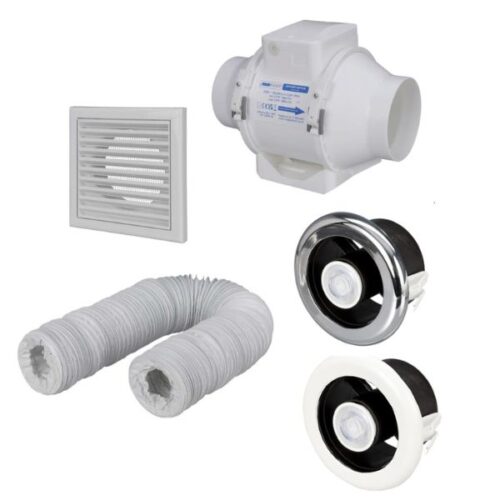
5 Signs Your Bathroom Ventilation Is Not Working Properly
Most people don’t give their bathroom extractor fan a second thought until something goes wrong. The problem is, by the time the signs become obvious, the damage is often already done. Mould creeping across the ceiling, paint bubbling off the walls, a persistent damp smell that never quite shifts, these aren’t just cosmetic issues. They’re the result of moisture that has nowhere to go.
The good news is that poor bathroom ventilation almost always gives you warning signs before things get serious. In this guide, we’ll walk you through the five most common indicators that your bathroom extractor fan isn’t doing its job, and what you should do about each one.
Sign 1- Condensation That Won’t Clear After a Shower
A little condensation on the mirror after a hot shower is completely normal. What isn’t normal is condensation that lingers on walls, windows, and ceilings for 20, 30, or 60 minutes after you’ve finished, or that never fully clears between uses.
A properly functioning bathroom extractor fan should begin drawing humid air out of the room while the shower is running and, with a timer overrun, continue to do so for 10–20 minutes afterwards. In a well-ventilated bathroom, surfaces should be largely clear within 15–20 minutes of switching the shower off.
If yours aren’t, there are a few likely culprits:
- The fan isn’t powerful enough for the size of the room; it may not be meeting the 15 l/s minimum required by UK Part F regulations
- The fan is switching off at the same time as the light, leaving no overrun to clear residual moisture
- The ducting is blocked, kinked, or disconnected, so the fan is running but not actually extracting
- The fan motor is ageing and no longer moving the airflow it used to
Persistent condensation is the earliest and most common warning sign of a ventilation problem, and the easiest to catch before it causes lasting damage. If your mirrors and walls are staying wet long after your shower, it’s time to take a closer look at your extractor fan. Not sure if your fan is up to the job? Browse our full bathroom ventilation range to find the right replacement.
Sign 2 – Visible Mould or Mildew on Walls and Ceilings
If condensation is the early warning, mould is the alarm bell. Black or grey mould growth on bathroom walls, ceilings, grout lines, or around the window frame is a direct sign that moisture has been accumulating unchecked — usually over weeks or months.
Mould thrives in warm, humid environments where airflow is poor. Bathrooms are a perfect breeding ground when ventilation fails. And while surface mould — the kind that appears on tiles or sealant — can often be cleaned with the right products, it will keep coming back unless you address the root cause: inadequate ventilation.
More concerning is mould that appears on ceilings, in corners, or behind furniture — this suggests moisture is penetrating into the structure of the building, which is a much more serious and expensive problem to resolve.
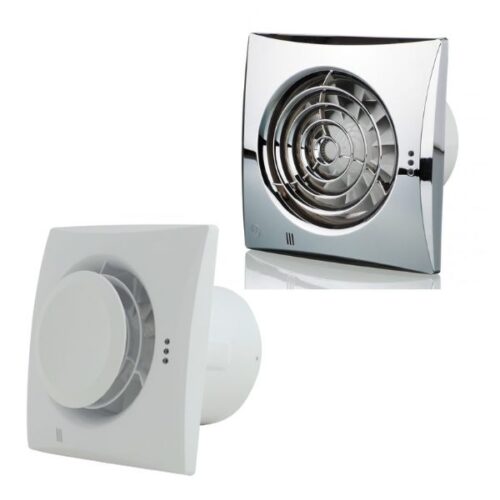
The most effective solution for mould caused by ventilation failure is a fan with a built-in humidity sensor (humidistat). Rather than relying on a timer or remembering to switch the fan on, a humidistat fan monitors the air in the room and activates automatically whenever humidity rises above a set threshold. It keeps running until the air is genuinely dry — which is exactly the kind of consistent, intelligent ventilation that prevents mould from taking hold in the first place. Hampton 100MM Zone 1 Humidity Timer Extractor Fan — automatically activates when humidity rises and runs until the air is clear. Zone 1 rated for installation directly above baths and showers.
Sign 3 – Your Fan Is Noisy, Slow or Has Stopped Altogether
This one might seem obvious, but it’s surprising how many people put up with a bathroom fan that rattles, hums, or barely moves any air, assuming it’s still doing something. Often, it isn’t.
A healthy bathroom extractor fan should run quietly and consistently. If yours is making grinding, rattling, or whirring noises it didn’t use to make, that’s usually a sign the motor bearings are wearing out. Similarly, if the fan seems slower than it once was, or if you can hold your hand near the grille and barely feel any airflow, the fan is likely past its best.
The tissue test is a simple way to check whether your fan is actually extracting air. Hold a single sheet of toilet tissue near the grille while the fan is running. If the tissue is pulled towards the grille and held there, the fan is working. If it falls away or barely moves, your fan isn’t generating enough airflow and needs investigating.
Common causes of a fan that’s running but not extracting properly include:
- A blocked or disconnected duct
- A failed or failing motor
- A blocked grille or filter clogged with dust and debris
- A grille cover that has warped or isn’t seated correctly
If the fan has completely stopped working, first check that it’s receiving power; a tripped circuit breaker or a failed fused spur is sometimes the culprit. If power isn’t the issue, the motor has almost certainly failed, and the unit needs replacing.
Camden 100MM Shower Fan Extractor With Timer — a reliable, quiet replacement for standard in-wall bathroom setups. Richmond 100MM Timer Shower Fan Extractor Kit — straightforward in-duct installation with adjustable overrun timer.
Sign 4 – Persistent Damp Smells Even After Cleaning
You’ve cleaned the bathroom from top to bottom, tiles scrubbed, surfaces wiped, floor mopped, and yet that musty, damp smell is still there. Sound familiar?
A persistent damp or stale odour in the bathroom is almost always a sign of poor airflow, not poor hygiene. When humid air can’t escape the room, it settles into porous surfaces, grout, sealant, plasterboard, and wooden panels, where moisture accumulates, and bacteria and mould spores begin to grow. Cleaning the surface doesn’t reach the moisture that’s already been absorbed into the fabric of the room.
The only way to properly address this is to restore adequate ventilation so that humid air is consistently removed before it has a chance to settle. A fan with a sufficient extraction rate for the room size, paired with a timer or humidistat to ensure it runs long enough after each shower, will gradually reduce the moisture content of the room and eliminate the conditions that cause the smell.
It’s also worth checking whether the duct is clear and properly terminated at the external grille. A partially blocked or poorly sealed duct can mean that damp air is being drawn into the fan but not fully expelled — creating a localised damp environment within the duct itself that can contribute to odours in the room.
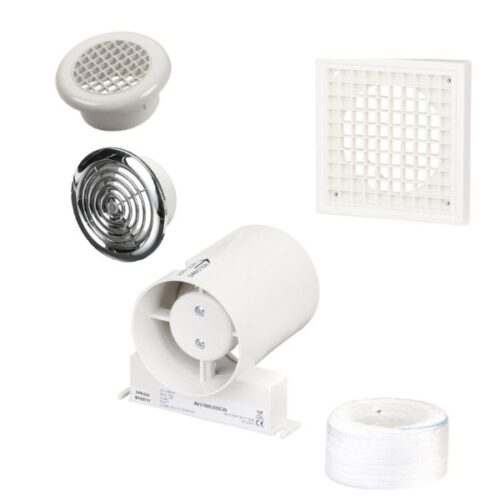
Portobello 100MM Axial In-Duct Fan Kit With Timer — consistent, quiet extraction that keeps fresh air moving through the room.Wall Grille Kit — check that your external duct termination is properly sealed and free from obstruction.
Sign 5 – Peeling Paint, Bubbling Wallpaper or Damaged Sealant
If you’ve noticed paint starting to bubble or peel from the ceiling, wallpaper lifting at the edges, or the sealant around your bath or shower cracking and discolouring, your bathroom ventilation has been failing for a while.
These are signs of prolonged moisture exposure. Water vapour that isn’t extracted from the room repeatedly condenses on cool surfaces, works its way into the substrate behind the paint or wallpaper, and gradually causes the bond to fail. It’s a slow process, which is exactly why it often goes unnoticed until the damage is significant.
Damaged sealant is particularly worth addressing quickly. Once sealant around the bath or shower starts to crack or lift, water can get behind it, leading to water damage to the wall structure behind and, potentially, the floor below.
The financial case for fixing your ventilation is straightforward: a replacement extractor fan costs a fraction of the price of redecorating a bathroom, replastering a ceiling, or repairing water-damaged joists. Getting the ventilation right now is almost always cheaper than dealing with the consequences later. Browse our full bathroom ventilation range – from straightforward timer fans to advanced humidistat and LED combination kits.
What to Do If You Recognise Any of These Signs
If one or more of the signs above sound familiar, here’s a simple checklist to work through before deciding on next steps:
1. Check the fan is actually running. Switch the fan on and use the tissue test described above. If the tissue isn’t pulled towards the grille, the fan isn’t extracting properly.
2. Check the duct. If possible, inspect the duct run for blockages, kinks, or disconnected sections. A blocked or collapsed duct will prevent even a perfectly functioning fan from extracting air. Also check the external grille — bird nests and debris are surprisingly common causes of blocked bathroom ducting.
3. Check the settings. If your fan has a timer or humidistat, make sure it’s set correctly. A timer set to zero, or a humidistat set too high, effectively means the fan isn’t working as intended.
4. Consider whether the fan is the right type for the installation. An axial fan on a long or complex duct run will underperform regardless of its condition. If the duct run is longer than 2 metres with bends, a mixed-flow fan is likely to be a much more effective solution.
5. If in doubt, replace it. Bathroom extractor fans have a typical lifespan of 5–10 years. If yours is older than that, or if you’ve worked through the checklist above without finding an obvious fix, replacing the unit is almost always the most cost-effective solution.
Not sure which fan is right for your bathroom? Read our full guide: How to Choose the Right Bathroom Extractor Fan
When Is It Time to Replace Your Bathroom Extractor Fan?
Most bathroom extractor fans are designed to last between 5 and 10 years under normal use. Beyond that, motor efficiency drops, bearings wear, and the fan simply won’t move the same volume of air it once did, even if it’s still technically running.
Here are the clearest signs that repair isn’t worth it and replacement is the right call:
- The fan is more than 7–10 years old
- The motor is making grinding or rattling noises
- The tissue test shows minimal or no airflow despite the fan running
- The unit has no timer or humidistat — features that are now considered standard
- The fan doesn’t meet the 15 l/s minimum required by UK Part F regulations
When choosing a replacement, use the opportunity to upgrade. A fan with a built-in overrun timer, a humidistat, or an integrated LED light will outperform a basic unit in every practical sense — and modern fans are significantly quieter and more energy-efficient than units from even five years ago.
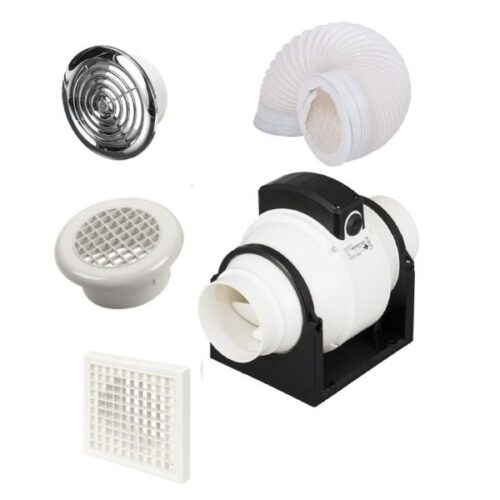
Richmond LED 100MM Timer Shower Fan Extractor Kit With LED — a modern, quiet in-duct replacement with integrated LED and adjustable timer.
Knightsbridge 100MM In-Duct Mixed Flow Kit With Timer — for bathrooms with longer duct runs where a standard axial fan hasn’t been keeping up.
Browse all bathroom extractor fans at TLW Global
Bathroom Ventilation – FAQs
How do I know if my bathroom extractor fan is working?
The easiest way is the tissue test. Hold a single sheet of toilet tissue near the fan grille while it’s running. If the tissue is pulled towards the grille and held there, the fan is extracting air. If it falls away or barely moves, the fan is not working effectively, check for a blocked duct, a failing motor, or a clogged grille.
How often should a bathroom extractor fan be replaced?
Most bathroom fans have a useful lifespan of 5–10 years. If yours is older than this, or showing signs of reduced performance, increased noise, less airflow, or persistent condensation despite the fan running, it’s worth replacing rather than repairing.
Can a blocked duct cause condensation problems?
Yes, absolutely. A fan that’s running but connected to a blocked or disconnected duct is drawing air into the unit but not expelling it outside. The result is the same as having no fan at all. Always check the full duct run — including the external grille, if condensation problems develop suddenly in a bathroom that previously ventilated well.
Why does my bathroom still smell damp even with an extractor fan?
If the fan is running but the smell persists, there are a few possible explanations: the fan may not be powerful enough for the room, the duct may be partially blocked, or the fan may not be running long enough after each shower to fully clear the moisture. A humidistat fan, which runs until the air is genuinely dry rather than switching off on a timer, often resolves this issue.
Is a noisy bathroom fan a sign it needs replacing?
Not always, but it’s a sign something needs attention. Rattling can sometimes be caused by a loose grille or debris in the fan housing, which is easily fixed. Grinding or humming from the motor, however, usually indicates worn bearings, and at that point, replacement is typically more cost-effective than repair.


 and then